
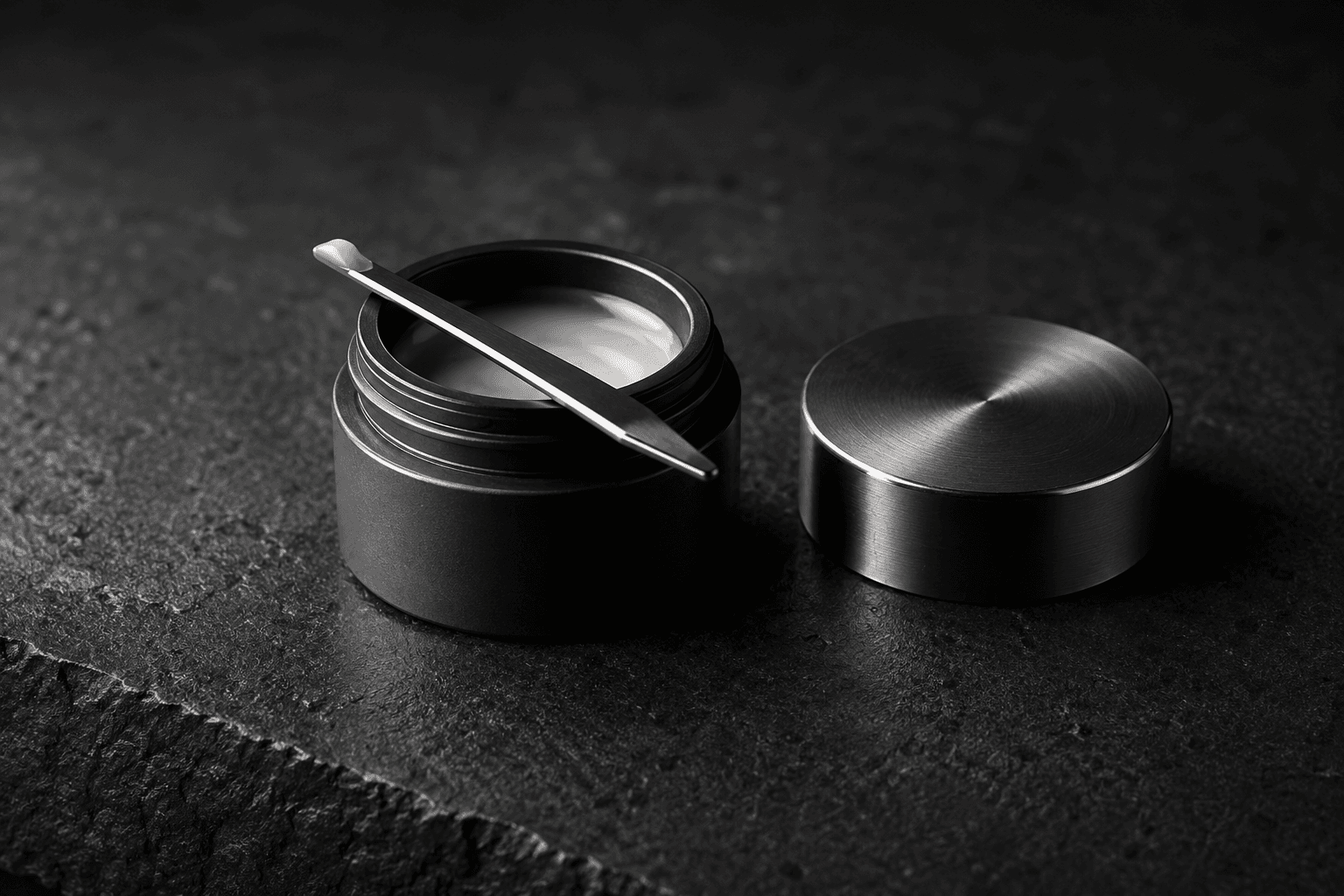
Eye creams are among the most marketed and most skeptically received products in skincare. Some of that skepticism is deserved -- a lot of them are just moisturisers in smaller packaging at four times the price. But not all of it. The right one actually works.
The Eye Area
The skin around the eyes is the thinnest anywhere on your face -- about a quarter the thickness at your cheek. A few practical consequences:
It shows dehydration first. A lot of early eye-area lines aren't true wrinkles -- they're dehydration lines that smooth out with proper moisture. A good eye cream handles these quickly.
It's more reactive. Fragrance and certain actives that are fine on the rest of the face cause irritation and puffiness around the eyes. Formulas for this area need to be gentler.
The structural issues are different. Puffiness is fluid accumulation -- worse in the morning, after alcohol, or poor sleep. Dark circles are vascular (bluish-purple), pigmented (brownish), or structural. Eye cream works for the first two. Not the third. For a deeper look at what's driving yours, see the eye cream for dark circles guide.
It ages earlier. This is consistently where lines appear first -- earlier than the forehead, earlier than the cheeks. Starting something preventive in your late 20s makes sense.
Ingredients
Caffeine tightens blood vessels temporarily. Puffiness comes down. Real effect -- hours, not days. Good for mornings.
Peptides signal the skin to produce more collagen. Cumulative effect -- weeks to months, not overnight. Argireline, Matrixyl, copper peptides are the most studied ones. Slow going, but real improvement in skin density over time.
Retinol has more evidence behind it than anything else here for fine lines. Works at lower concentrations around the eyes -- the skin here can't take as much. I'd start at 0.025% and use less than you think you need.
Hyaluronic acid and ceramides handle dehydration lines. The baseline for this area -- why even a cheap hydrating formula often makes a visible difference fast.
Vitamin K shows up in some formulas for dark circles. Limited evidence. More useful for the bluish-purple type of dark circles than the brownish kind.
Niacinamide is easier to use near the eyes than most actives -- rarely irritates. Addresses pigmented dark circles gradually.
What It Can't Do
Hollow tear troughs, deep-set wrinkles, significant skin laxity -- none of these respond to eye cream. Filler handles hollowing; the other two need more involved options. If something's been building for years, give treatment months, not a few weeks.
Gradual improvement with consistent use. Dehydration lines resolve quickly. Prevention over the long term.
The Picks
The Inkey List Caffeine Eye Cream
Lightweight caffeine gel -- one of the faster-absorbing formulas I've tried. Puffiness is down within about half an hour. Hyaluronic acid for hydration, fragrance-free, thin enough to sit under SPF. One of the better value options here.
If you want to start somewhere and not spend much, this is it.
The Inkey List Caffeine Eye Cream
Kiehl's Creamy Eye Treatment with Avocado
Heavy formula, noticeably richer than most. Avocado oil, beta-carotene. Better for morning puffiness if you have dry skin. More comfortable applied at night than layered under SPF.
Kiehl's Creamy Eye Treatment with Avocado
CeraVe Eye Repair Cream
I've been recommending this one longer than any other on this list. Fragrance-free, gentle around the eyes, and the niacinamide does actually make a difference to pigmented dark circles over time. The ceramides do the barrier work. If someone tells me they've never used eye cream and want to start -- this is the one.
CeraVe Eye Repair Cream
RoC Retinol Correxion Line Smoothing Eye Cream
RoC has been doing retinol longer than most, and this is their main eye product. Retinol concentration is appropriate for the periorbital area -- strong enough to deliver results, not so strong it causes flaking or irritation if used as directed. Best applied at night, every other day initially to allow the skin to adjust.
Expect to see results at the 8-12 week mark. Not a quick fix. More of a long-term maintenance call.
RoC Retinol Correxion Eye Cream
Neutrogena Rapid Wrinkle Repair Eye Cream
A more accessible peptide option. Contains retinol and glucose complex alongside hydrating agents. Absorbs fast, doesn't pill under SPF. Fine lines and crow's feet -- you'll see a real difference with consistent use.
Neutrogena Rapid Wrinkle Repair Eye Cream
Clinique All About Eyes Rich
Derm-recommended, and one of the more complete formulas at this price point. Peptides, vitamin C, ceramide complex. The "Rich" version is for dry skin; the standard for combination or oily. A lot of function without prescription-level spend.
Clinique All About Eyes Rich
La Mer Eye Concentrate
Their Miracle Broth (fermented sea kelp) with a peptide complex and light-reflecting particles. The texture is unusually comfortable around the eyes -- neither too heavy nor too light. Genuinely effective, particularly for men with dry or mature skin in their 40s and beyond where the skin density reduction makes the eye area look sunken and tired.
At this price point, you're paying for a formula that performs measurably better than mid-range options -- but the performance gap above Clinique or Paula's Choice is smaller than the price gap suggests.
La Mer The Eye Concentrate
How to Use It
Use your ring finger. It applies the least pressure -- important around the thin orbital skin.
Apply to the orbital bone, not directly on the lid. Product migrates with body heat. Applying straight to the lid risks milia -- blocked pores from product build-up. It gets there anyway.
A pea-sized amount. That covers both eyes. These formulas are concentrated -- using more doesn't add benefit.
Order in routine: After serums, before moisturiser. Before SPF in the morning. Pat, don't rub.
Consistency beats price. Twelve weeks of the cheap one, every day, beats the expensive one used when you remember.
When to Start
Whenever you notice something worth addressing -- or your mid-to-late 20s as prevention. Eye skin ages before the rest of the face. Peptides and retinol are cumulative -- starting early means holding what you have, not chasing what's gone.
Starting in your 30s or 40s is fine. Skin responds at any age -- it just takes a bit longer.
Beyond the Cream
Eye cream is useful. But these have a bigger impact:
Sleep. Nothing affects the eye area more. Puffiness, dark circles -- both dramatically worse without it. Eight hours does more than any $50 cream.
Alcohol and sodium. Both cause fluid accumulation that shows up around the eyes first. I've seen the difference the morning after cutting back.
Allergies. If you have chronic allergies, they're probably driving more of the under-eye problem than any product can address. Treat the allergy first.
Sun protection. UV breaks down collagen around the eyes faster than anywhere else. SPF is better prevention than any eye cream is treatment.
Questions
Do I actually need a separate eye cream?
Regular moisturiser around the eye area works fine. A dedicated formula is worth it if you have a specific concern -- puffiness, dark circles, fine lines -- because it's built for that. No specific concern? Your regular moisturiser is fine.
How long does it take?
Caffeine and hydration you'll feel within a couple of days. Retinol and peptides take 8-12 weeks before you see anything. Dark circles via niacinamide -- closer to three months.
What about wearing glasses?
No. Glasses sit on your nose bridge and ears -- nowhere near the orbital area.
When should I apply it?
Both. Morning is when caffeine does its thing; night for retinol and deeper hydration. One product? Twice a day.
My eye cream stings. Is that normal?
Mild tingling with retinol is normal at first. Actual stinging or redness isn't -- that's usually fragrance. Switch to something fragrance-free. CeraVe is where I'd start if your skin's reactive.