
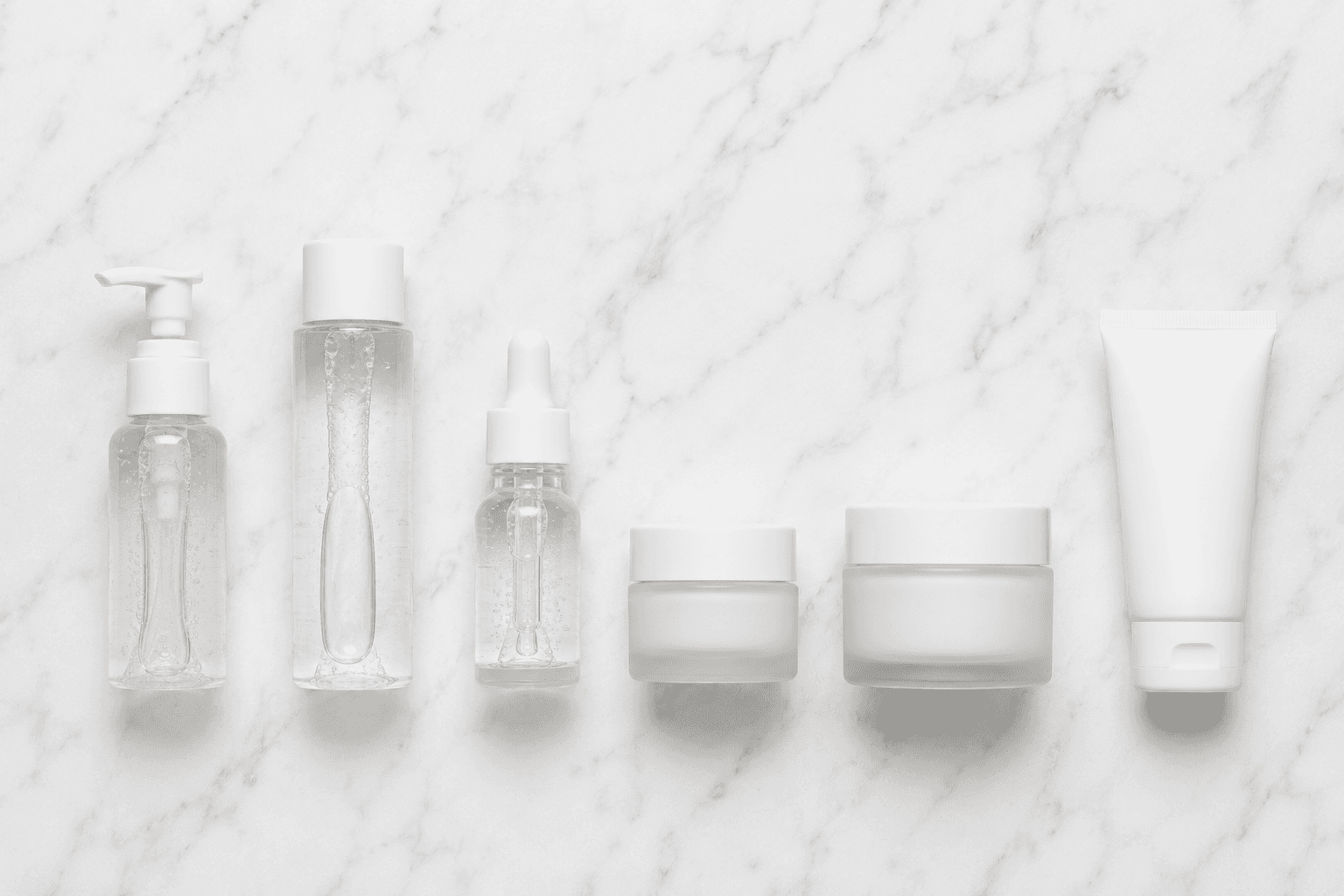
I got the order wrong for years. A serum layered under moisturiser, vitamin C whenever I remembered, SPF somewhere in the middle. Nothing was broken exactly, but nothing was working properly either. The order actually matters.
Thinnest to thickest, water-based before oil-based. That's the rule. It gets more complicated once you start adding actives.
Why Layering Order Matters
Heavier products create a seal. Moisturiser before serum and the serum just sits on top of it -- it can't get through. I did this for about a year before I worked out why my serum wasn't doing anything.
Some actives need direct contact with clean skin to work. Acids are the obvious one.
The Complete Morning Routine Order
Step 1: Cleanser
Overnight oil and whatever's left from your night cream. A gentle cleanser handles it -- nothing aggressive needed in the morning.
Step 2: Toner (if using)
Straight after cleansing. Glycolic or BHA toner -- I give it about 15 minutes before the next step. Hydrating toner, carry straight on.
Step 3: Vitamin C Serum (if using)
Goes on clean skin, nothing else applied yet. I wait a minute. If you're not sure which form to look for, the vitamin C serum guide covers what actually matters.
Step 4: Other Serums and Treatments
Thinnest to thickest. Niacinamide, hyaluronic acid, peptides -- this step.
Step 5: Eye Cream
Ring finger, orbital bone. Before moisturiser.
Step 6: Moisturiser
Seals everything in. Gel if you're oily, something richer if you're dry.
Step 7: SPF (Final Step, Every Morning)
Last step, no exceptions. Sits on top -- put it under moisturiser and it can't do its job. SPF 30+ minimum, broad-spectrum.
Foundation goes over it after it's absorbed. Nothing else on top.
The Complete Evening Routine Order
Step 1: Oil Cleanser or Micellar Water (Double Cleanse, if needed)
SPF and makeup need an oil-based cleanser to actually come off. Micellar water works too. Regular cleanser after.
Step 2: Cleanser
Gets everything the first step missed.
Step 3: Toner (if using)
Same spot as morning. Night exfoliating toner -- this step.
Step 4: Actives -- Exfoliating Acids (AHAs/BHAs)
Standalone acids rather than toner -- dry skin, this step. I wait about 20 minutes after cleansing. Makes a difference.
Two to three nights a week to start. More than that and you'll know about it.
Step 5: Serums
Thinnest to thickest, same as morning. Niacinamide here -- if I didn't use it in the morning.
Step 6: Retinol or Prescription Retinoid
After serums, before moisturiser. The moisturiser that follows takes the edge off the irritation -- useful when you're getting started. Every other night to begin. If you're new to it, the retinol for beginners guide is worth reading first.
Prescription retinoid -- follow your dermatologist.
Step 7: Eye Cream
Same as morning -- before moisturiser.
Step 8: Moisturiser or Night Cream
I use something richer at night than in the morning -- no SPF going over it, so there's no reason to hold back.
Step 9: Face Oil (if using)
Thickest product, goes last. Rosehip, squalane, jojoba all work well.
Rules for Layering Active Ingredients
Don't Mix Acids and Retinol in the Same Step
Both are exfoliants and together they're too much for most skin. Acids before retinol if you use them on the same night, or just alternate -- that's what I do.
Vitamin C and Niacinamide Can Be Used Together
The concern about these two not playing well together is old. They're fine together. I use vitamin C in the morning, niacinamide at night -- works well. More on this in the niacinamide and vitamin C FAQ.
SPF Always Goes Last in the Morning
No exceptions. Under moisturiser and it can't do its job. SPF built into your moisturiser isn't the same thing.
Wait Times Matter for Strong Actives
L-ascorbic acid works best at a low pH -- I give it about 30 seconds after toner before applying. Same with acid toners -- I wait before anything goes over them.
Frequently Asked Questions
Do I need to follow every step every day?
No. Cleanser, moisturiser, SPF -- that's a real routine. Add things gradually once you know what you're working with.
How long should I wait between steps?
30 seconds between most steps is enough. Actives -- vitamin C, retinol, acids -- I give a full minute or two. Less irritation and better absorption.
Can I use the same cleanser morning and night?
Yes, same cleanser is fine. Very dry skin -- water only in the morning is fine.
What if I only have 5 minutes?
AM: cleanser, moisturiser, SPF. PM: cleanser, one active, moisturiser. Every day short beats every few days full.
Does toner still matter?
Not the same as the astringents from the 90s. Hydrating toners -- hyaluronic acid, glycerin, niacinamide -- prep skin for what comes after. Exfoliating toners are just acids in toner form. Whether you need one depends on what else is in your routine.